Let’a Play - Limbo


The game limbo is a puzzle video game starring a nameless boy who woke up in a middle of nowhere in a search to find his sister, he got trapped in a world of Limbo. This game symbolizes a gruesome journey of a boy towards finding his sister. Limbo is a puzzle-platform video game with just using keys consist of for walking with the basic arrow keyboard and control button for grabbing and pushing objects. It is believed behind all the obstacle in this game represents this boy’s fear; for example, swimming, spiders, heights, etc.

What made this video game catch our eye was the the art expressed in Limbo, the complexity and graphics in this game represent the art in the game. The art in the video help show what the game is about and help us understand the videogame more. Limbo also expresses empathy, Bogost explains, “one of the unique properties of video games is their ability to put us in someone else’s shoes.” In the game limbo we were this character running through the woods trying to escape death which connected to our emotions and made us want to beat every obstacle.

Overall from what we all experienced, most of our first expression towards this game, considering its black and white graphic, is most likely going to be scary and would expected a jump scare at some point. Limbo is also very graphic because at some point you fall to a trap and looks like blood squits out of him. Alex mentioned that this game could capture more emotion in the setting. Selena, Maria, Lexi, and Nabila, agrred that we liked the fact that we do not know what will come next after what we just went through and this kept us interested with the game keep wanting to play it again andd again.
Let’s Play- Inside

The game that we played was Inside, a side scrolling puzzle game that focuses on a young male protagonist running away and hiding from mysterious people trying to stop him at all costs. The game takes you through forests, barns, lakes, rooftops, and warehouses as you desperately try to stay alive.

The atmosphere of this game was very dark. The minute you begin, you find yourself in a black and white style forest, highlighted with dark shadows and silhouetted figures. The music is almost nonexistent, instead playing eerily in the background until one of the figures spots you or a dog is sent to maul you. Then the tempo picks up and the tension increases, making you feel panicked and scared. It isn’t until later when you enter a barn and find momentary sanctuary that colors begin to seep into the settings.

The game is set up so that you’re questioning it from the very beginning. Where are you? Who are you? Why are you running? After about an hour in, you begin wondering if you’re going to get any answers. This game is definitely intriguing and holds interest despite being fairly simple from the get go. The lack of dialogue and any and all instructions would seem to be a hindrance to the player, but the tone that it sets up is so intriguing and you easily get sucked into the bleak, sober little world.

As a group, we all had a great time playing it, watching each other succeed and fail. Opting to play it together helped alleviate the depressing nature of the game. Inside is a great example of how Bogost claims that videogames frequently recreate real world scenarios. Despite the obvious dystopian themes of the game, many of its elements are still relatable to our current world. From mind control to hordes of zombie-like civilians marching in rows to military-esque personal hunting and chasing you down for your implied rebellion against the grain, this videogame can match many real world issues that we face today.

Inside demonstrated how videogames can generate an emotional response from the player. The art style and key events help create caring and empathy for the main character, despite the protagonist being a faceless child with no personality and no dialogue to build character or conflicts. It really is a game where you’re thrust into the action and from there it’s up to you to interpret the meaning.


Lets Play Video

The game we chose was Undertale, which none of us have played, before so we really didn’t know what to expect. The game started off with the player character falling into a hole and travelling deep underground. The player then encounters a deceivingly friendly flower named Flowey, who teaches the character about combat and then quickly turns on them. After taking a hit, a goat have person monster named Toriel attacks Flowey and saves you. She takes you further underground towards her home and you learn that the underground is solely occupied by monsters. We played off of each other’s progress, and deaths making progress withing the missions. None of us really understood what was going on or what was the end game for the game. The game was slow and repetitive with gameplay similar to Pokemon with monsters getting harder as you progress. The puzzles within the game did make it a little exciting, but it did just become repetitive because all the puzzles that we encountered were very similar the same. The character Just fell through all times when you failed a puzzle and didn’t really explain why we did.

We played off of each other’s progress and deaths, getting as far as we could. None of us really understood what was going on or what was the end goal for the game. The game was slow and repetitive with gameplay similar to Pokemon with monsters getting harder as you progress. The puzzles within the game did make it a little exciting, but it did just become repetitive because all the puzzles that we encountered were very similar. The positives about the game seemed to be its sense of humor and twist on turn-based gameplay, since you could spare your enemies and had dialogue options in battle like giving compliments and flirting.


Lesson: Social Games

Featured Image: Screenshot from Super Columbine Massacre! RPG.

Announcement

Ethics & Information Use Workshop

Tomorrow: September 14th, 2016, 3:10-4:30pm

Digital technologies give us unprecedented power to find, manipulate, and share information. But how do we do that responsibly? This workshop will cover issues of information ethics and provide practical tips for responsible information use in everyday situations. Led by David Squires, Visiting Assistant Professor of Digital Humanities (English Department and Digital Technology and Culture Program).

Digital Literacy Workshops

The CDSC offers a series of workshops for WSU students seeking hands-on instruction in the foundations of digital literacy. Facility with digital tools is a fundamental prerequisite for joining any contemporary profession and, as with reading and writing skills, college instructors across the disciplines expect students to arrive on campus with a foundational level of digital literacy. These workshops help all students meet those expectations, regardless of major.

Registration is not required for these workshops.

Bringing a laptop to work on is encouraged, but not required.

Questions? Please contact David Squires: [email protected]

Digital Literacy: Finding truth in a Web of Lies

Digital Literacy: Navigating the Library

Attendance Activity (10 minutes)

Name a casual game or social media game that you currently play (ex: Candy Crush, Threes, Subway Surfers, Pet Rescue Saga). What’s your favorite? Why?

Play, Watch, and Discuss (40 minutes)

How do each of these use procedural elements (i.e. gameplay) to make a particular political or social argument? Is there a difference b/t a game that has a specific agenda and one that is merely for entertainment?

  • Tax Evaders
  • Spent
  • Stop Disasters!
  • Unmanned
  • Super Columbine Massacre! RPG

Time in Groups: Plan Second Presentation for Thursday (20 minutes):

  1. Figure out all of the elements you’ll need for your board game, including prices for components, etc. What might you do to lower that price?
  2. Draw out your board and/or write out the kinds of cards you’ll need to complete the game.
  3. Make 3 revisions that will 1) make your rules simpler; or 2) streamline the components of the game.
  4. Prepare for the presentation on Thursday. How long does your game take? What are some ways you can limit that time?

Reminder:

Your Let’s Play! video game exercise is due by midnight tonight!

Let’s Play Assignment: Metrico

For our group let’s play assignment, we picked the game Metrico. Our first impressions and reactions to the game varied between our group members. Erika and I had similar feelings about the game. We both felt that it was very confusing at first with little to no instruction. For the most part, all of our group members felt that it was at least a little confusing at the beginning because of the lack of instruction. However, as the game progressed, all the players got adjusted and rose to the challenge. We thought in the beginning the game was an action game, but it turned out to be more of a puzzle oriented game. Everyone in our group agreed that the game was sufficiently challenging in the puzzles, and Erika even said that figuring out the puzzle made the game somewhat rewarding. I would agree that after struggling through all the puzzle and finally figuring it out was extremely gratifying. I also learned that some of the hardest parts of the puzzle, the solutions were the simplest. Many elements of the game were not what they appeared. Initially, a lot of the seemingly impossible puzzles had the easiest solutions to them. This made the game in my opinion extremely frustrating. Another frustrating part of the game was there was no end. There was no clear way to die in Metrico. Each time you were stuck on a level the puzzle simply restarted and you started again. This made the game in a way continuous and easily addictive. Evan also said that he thought the game was very smart with how the puzzles were formed in a very creative and interesting way, and that Metrico was one of the most unique games he ever had played. All the group members agreed that the layout of the game was very unique; the backdrop was completely made out of simple shapes and one basic color. Our overall takeaway from what we learned about video games through playing Metrico was that struggling through a puzzle that seems impossible eventually works itself out in the end.

Co-authors:

Evan Johnson: https://youtu.be/YiFNpVRtuKU

Erika Chavez: https://youtu.be/q_HBlkxCOuw

Helena McLeod: https://youtu.be/F1sks4VtOnk

McKenna Palmer : https://www.youtube.com/watch?v=jTyR7Pz7uIQ&feature=youtu.be.

Portal 2 videogame attempts


My group of Colette, Amber, Darby, and Ray attempted the game Portal 2. Darby was the best at this game as the rest of us were equally bad and unskilled. The game Portal 2 is difficult to move and difficult to see the whole screen. We had plenty of technical difficulties like no sound, uploading a bunch of recording applications and finally finding one that worked the best. Portal 2 is a game about jumping through portals and just getting to the next level but it seems to be in the location of a mental institution and defiantly gives off a creepy vibe. Our group is not the best at anything with technology like uploading the videos and working sound and all but we spent a solid amount of time and brains trying. Relating our experience to Ian Bogost is similar to most video games. Bogost talks about video games as a model of reality or imaginative systems. As we play we get so into the rules of the game and learn to evolve to those worlds to survive our video game. Through a video game the further we get and the more rules we figure out the more we can find the meaning of the game and maybe where the creators came up with what they did. Bogost says “video games is a kind of literacy, the kind of literacy that helps us make or critique the systems we live in.” We agree with what Bogost says as you do evolve to the rules of the game just like life as we learn to follow the rules of our society and let them evolve us. Sometimes we do not like the rules or understand why they are placed but they help us get to the next level of society/ next level of a video game. It seems impossible to play video games on a regular basis and not somehow get attached or morph your behaviors around your video game. Subconsciously your behavior would change into a video game if you played it enough and understand the game enough. Clearly most video games are very unrealistic but the behaviors or actions can stick with you.

Darby

Amber

Colette

Rae

Running with Rifles

this post was about my experience playing the game Running With Rifles. I personally felt unconnected to the game, because it was a demo it didn’t give me a lot of options to customize the characters or to ensure that there were enemies. You run around and shoot using your mouse, but the reaction time is very slow. Holding down the mouse enables you too shoot. You can’t really go far within the map, only around the perimeter. There were no enemies until later on but it won’t show for whatever reason. Anyways, the game wasn’t that good.

Lesson: Presentation

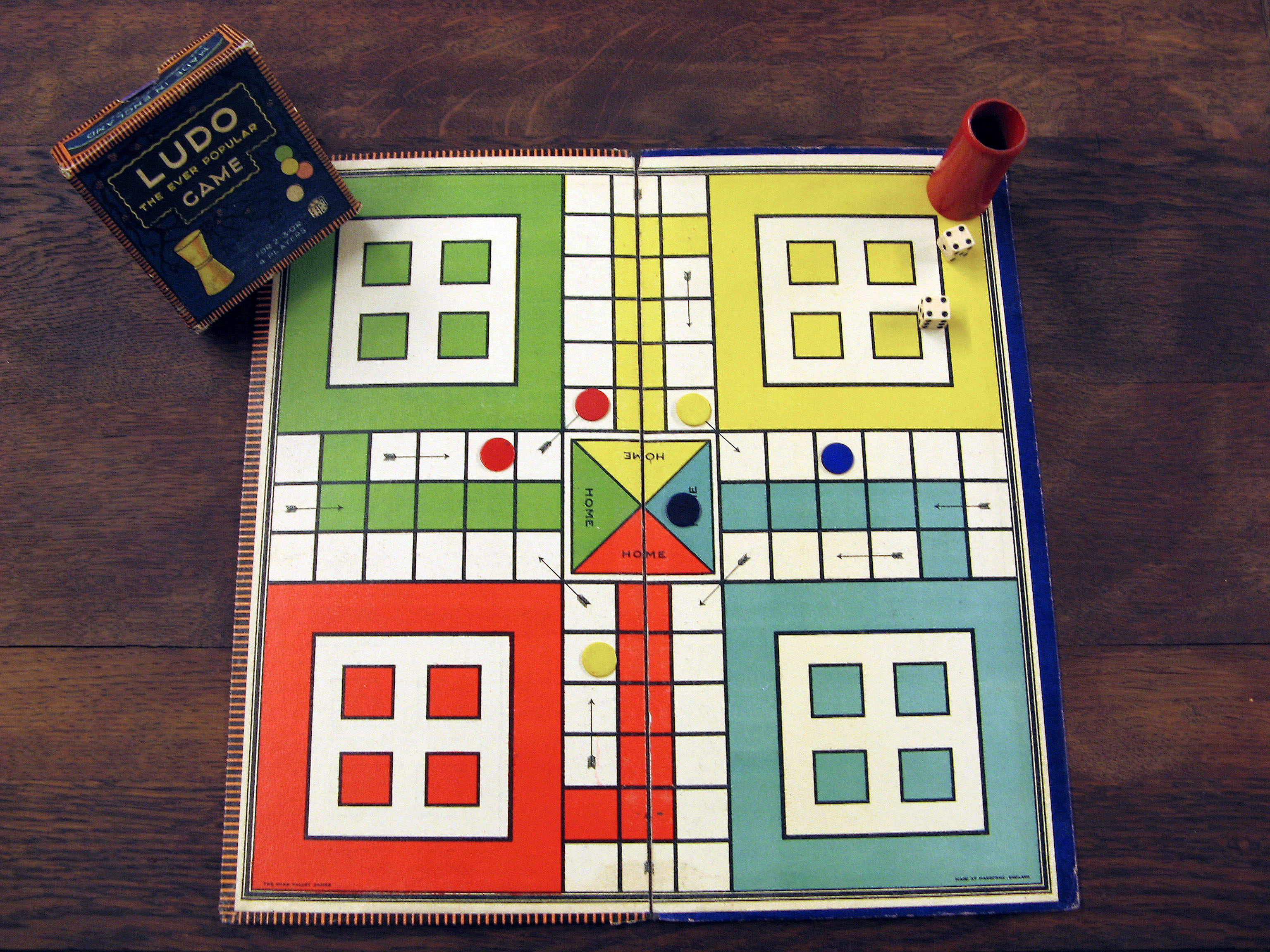
Featured Image: An Old Ludo Board by Micha L. Rieser.

Attendance Activity (10 Minutes)

What emoji do you use the most? Which emoji is the best one to use? The worst?

Group Work (15 minutes)

Figure out what you’ll be presenting today in your 5 minute presentations. Remember, I’m looking for:

  • The basic concept, basically your pitch you developed today.
  • Major rules, can be connected to the procedural elements you like from other games.
  • Major parts of the game, including game pieces, a rough sketch of the layout of the board.

I also want you to add one more thing:

  • An alternate concept: If your current idea doesn’t end up working, what might be a second idea that you’ll develop? Having backups is always a great idea when you pitch a game.

Presentations / Workshop (30 minutes)

I’ll want you to ask questions and provide advice for each group’s presentations. Remember, just saying “it’s good,” doesn’t really help the project.

  • What are games that the group’s project reminds you of? Is their proposal interesting enough to make you want to play? Why/Why not?
  • What ways can the group streamline their idea? Remember, first ideas are almost always in need of simplification or refining.
  • How can they revise their rules or their pieces to more closely represent their main concept? In some situations, groups may have good ideas, but have trouble implementing them in a game form.

Reminder: The first blog post is due by midnight, next Tuesday, September 13.