I was glad to see the various responses by my colleagues in the digital humanities to the LARB article. Ted Underwood and Alan Liu both provided nuanced historical and theoretical contexts for the archival and infrastructural work done in the field. Schuyler Esprit and Roopsi Risam, meanwhile, compellingly argued for PoC scholars, alt-ac and NTT labor, […]
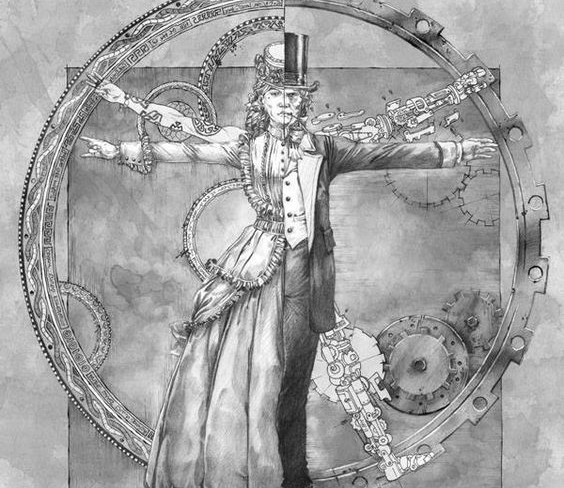
Recent panels for NAVSA have emphasized both revisionist historical approaches inspired by steampunk literature, on the one hand, and by non-human and posthuman social networks, on the other. Even though these discourses have separately been identified as important influences for Victorian studies, relatively few of these panels have focused on the intersection between them. Rosi […]
Recent panels for NASSR have emphasized eco-criticism and animality in relation to the non-human, charted the varied responses of the Romantics towards technology, and explored emerging methodologies associated with the digital humanities. Relatively few of these panels, however, have fully considered the posthumanities as a conceptual frame uniting these scholarly approaches. Rosi Braidotti’s The Posthuman […]
I’m still processing Tara McPherson’s and Craig Dietrich’s wonderful visit to Washington State University this past week. One thing I wanted to talk to both of them more about is the way their work reinscribed the avant-garde and critical theory back into the digital humanities. Several people have successfully applied analyses of race, gender, sexual […]
Debbie Lee asked each one of Leeann Hunter’s “Literature Pedagogy” Study Group to come with an exercise that works well in a literature classroom. This is my contribution, adapted from Sheridan Blau’s The Literature Workshop: Teaching Texts and Their Readers and Mark Sample’s “On Reading Aloud in the Classroom.” A longer version of this assignment […]
Old vs. New – Traces of the Old, Promises of the New. Create or Preserve? I decided to do this through my class blog, inspired by the blog Jentery Sayers keeps on his courses — because his notes are awesome. My notes might eventually become as structured as Jentery’s, but for now, I’ll probably just […]
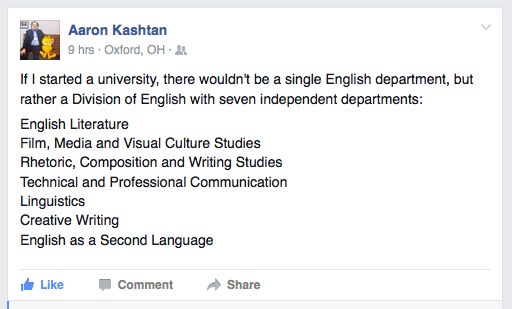
I love this idea from Aaron Kashtan on Facebook. Here’s how I’d tweak things to make the vision more interdisciplinary and reflective of my own hopes for the future of English. Note that the thesis tying all of these forms of study together is the notion that a majority of voices in cultural expression have […]
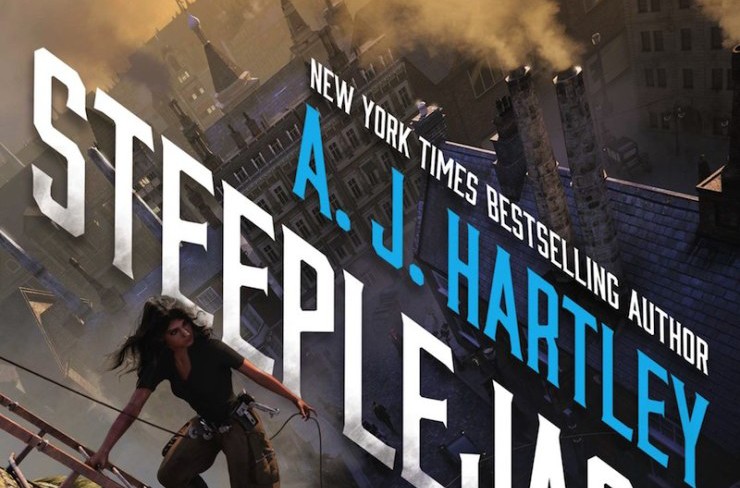
Steeplejack. A.J. Hartley. Tor Books, 2016. pp. 336. $18. ISBN: 978-0-7653-8342-6. WARNING: This review contains mild spoilers. Also, full disclosure, Diana Pho graciously provided me with an advanced copy of the book. The most compelling moments in A.J. Hartley’s steampunk novel Steeplejack occur when Anglet Sutonga recalls the deaths of people lost in the city’s […]
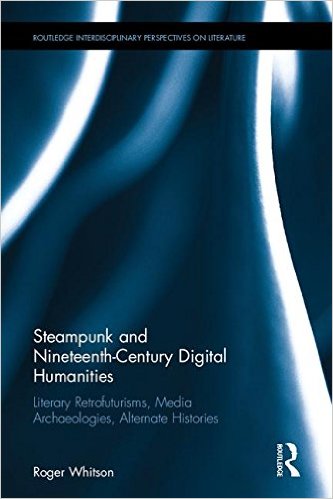
I believe this post is long overdue. Since the reason for the post is embedded in my most recent scholarship, I’d like to share a bit of my recent work in steampunk towards the end. First, though, I want to address the conclusion of Amy Earhart’s Traces of the Old, Uses of the New where […]
I just started reading Caroline Levine’s fascinating, provocative, and inspiring book Forms: Whole, Rhythm, Hierarchy, Network (Princeton UP, 2015). I decided to write a short reflection on the first chapter, and I may or may not continue doing this as I proceed through the book. Like most people who have studied literature over the past twenty years, […]