Hi everyone. I’d like to begin by arguing that I don’t believe that steampunk is a literary genre. Yes, it may have started as a literary genre, as KW Jeter attests when writing a letter to the editor of Locus identifying the novels that he, Tim Powers, and James Blaylock produced as “steampunks” in 1987. But Jeter’s interpretation of these novels as “written in the gonzo-historical manner” provides, for me, a more accurate portrayal of what steampunk has become. Steampunk signifies a materialist/historical practice that punctuates history with potential alternatives (what we might call an alt-historicism). In terms of matter, I want to suggest that this materialist association requires “getting your hands dirty” and participating in what Matt Ratto and Garnet Hertz call “critical making” — tinkering, baking, making, constructing. I’ll get to critical making in just a moment. Let me now turn to what this materialist association with history might mean to a scholarly culture that is used to writing papers and presenting them at conferences.
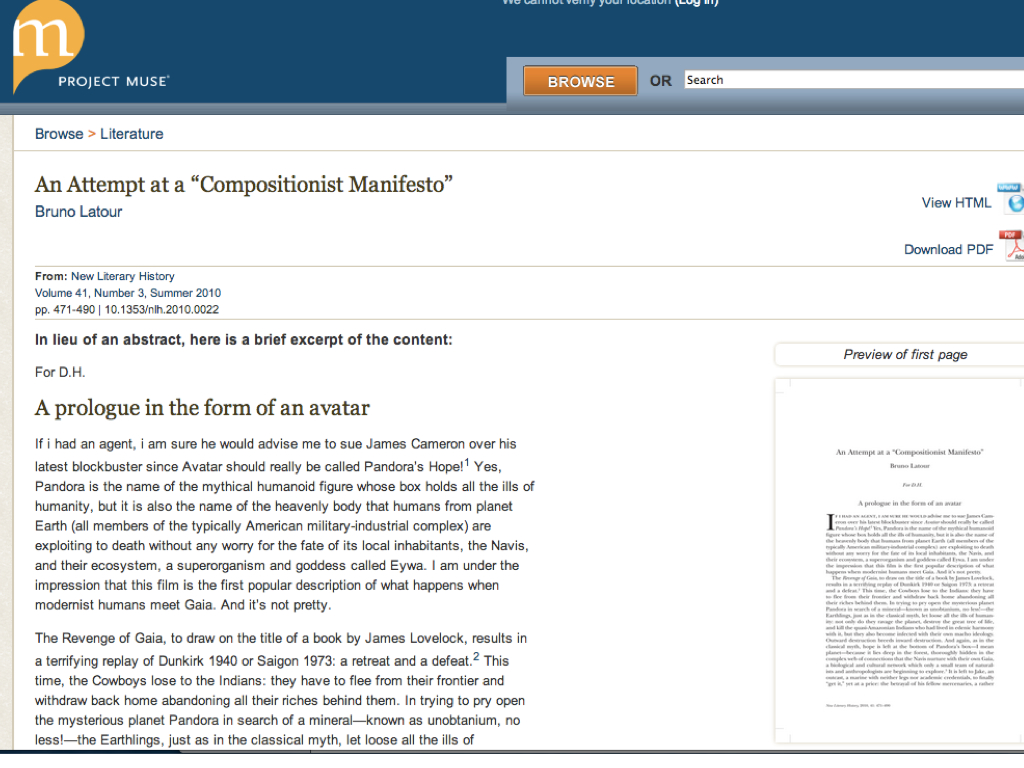
One of my favorite articles from the past few years is Bruno Latour’s “An Attempt at a Compositionist Manifesto” from New Literary History. I believe that Latour makes a compelling case for a constructivist (rather than realist) approach to history. In other words, he suggests critical theory can’t appeal to history as real because we no longer believe in “a true world of realities lying behind a veil of appearances” (474-5). But I take issue with the way he appropriates Nietzsche’s hammer to make this point. Of course, we know that the subtitle to Nietzsche’s novel Twilight of the Idols is “How to Philosophize with a Hammer,” and many scholars take this as a metaphor for his iconoclastic approach to philosophy. Latour seems to as well. “What performs a critique,” Latour tells us, “cannot also compose. […] With a hammer (or a sledgehammer) in hand you can do a lot of things: break down walls, destroy idols, ridicule prejudices, but you cannot repair, take care, assemble, stitch together” (475). Of course, anyone who’s ever worked with a hammer knows this is simply not true. Rubber mallets align drywall, ball-peen hammers strike metal when forging tools or weapons, lump hammers affix concrete blocks together with masonry nails, framing hammers construct the frames of wooden houses, and upholstery hammers secure fabric to furniture. Even sledgehammers create and repair, by driving spikes into the ground and connecting railroads with ties. Philosophizing (or theorizing) with a hammer, thus, has to get us beyond the dichotomy Latour presents here.
The emerging field of “critical making” is one way to frame a more nuanced approach to Latour’s conundrum. For Matt Ratto, critical making “signals a desire to theoretically and pragmatically connect two modes of engagement with the world that are often held separate — critical thinking, typically understood as conceptually and linguistically based, and physical ‘making,’ goal-based material work.” Garnet Hertz sees critical making “supplement[ing] and extend[ing] critical reflection on technology and society.” Critical making responds not only to the digital utopianism of recent years, but but also what McKenzie Wark has recently identified as a tendency amongst humanist scholars to simply replace technological determinism with social determinism. Cases like Latour’s show that humanist scholars are all too quick to ignore social determinism while leveling charges of technological determinism against certain authors. I’d like to suggest that this tendency is due to having relatively more familiarity with concepts and texts to the detriment of gadgets, code, and objects.
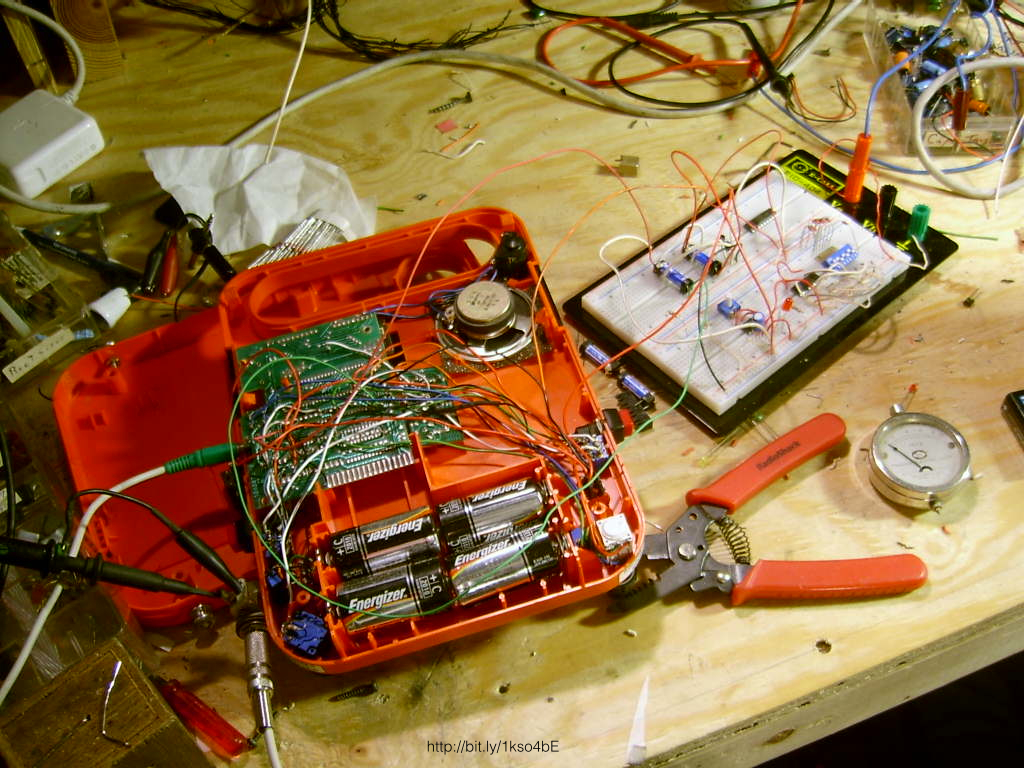
Hertz has identified circuit-bending as one form of critical making. Practitioners of circuit-bending break open the black boxes of consumer electronics (like the Speak and Say you see here), find “bends” or (hopefully low voltage) unintentional electronic currents that produce novel effects, and create their own interactive objects. Of course, we see how this practice challenges Latour’s dichotomy. Circuit-bending definitely destroys something in the act of creating something else: the original electronic gadget no longer operates in the same way. In another sense, circuit bending shows how history can be explored in a materialist act. Practitioners have to acquaint themselves with the workings of technology that may (by all accounts) be obsolete. They literally have to dig into the materials of history in order to create their work.
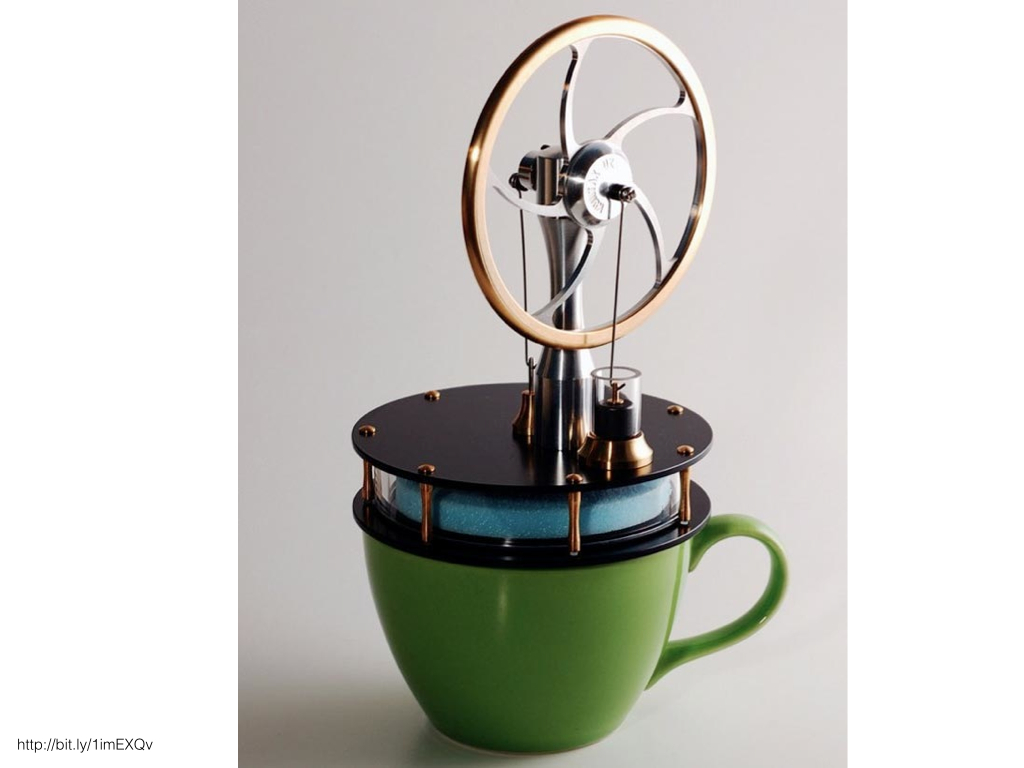
Steampunk inspires these kinds of materialist intervention into historical technologies. Consider, for instance, Jim Shealy’s “Teacup Stirling Engine” project from Make Magazine. Stirling engines produce work for a piston by translating energy into heat given off by liquids undergoing a thermodynamic change. The difference in temperature between the two plates cause them to move up and down, thereby turning the wheel on top. Apart from simply learning about the mechanism of steam or how it produces energy, Shealy’s project also intervenes into a specific history of technology.

We’re told that Stirling engines lost out to to first, the steam engine and; second, the internal combustion engine. This was due mostly to the fact that the plates require a huge temperature differential to work (Shealy notes the differential to be around 200 degrees) and that lubricants invented in the nineteenth century were not up to the task of protecting the engine parts. Still, there has recently been an increased interest in producing these gadgets in the engineering community, to provide an alternate energy source that can handle dwindling oil supplies. More generally, steampunk gives an impetus for some engineers and tinkerers to revive old technologies, incorporating them as alternatives to (both) the past and the present.
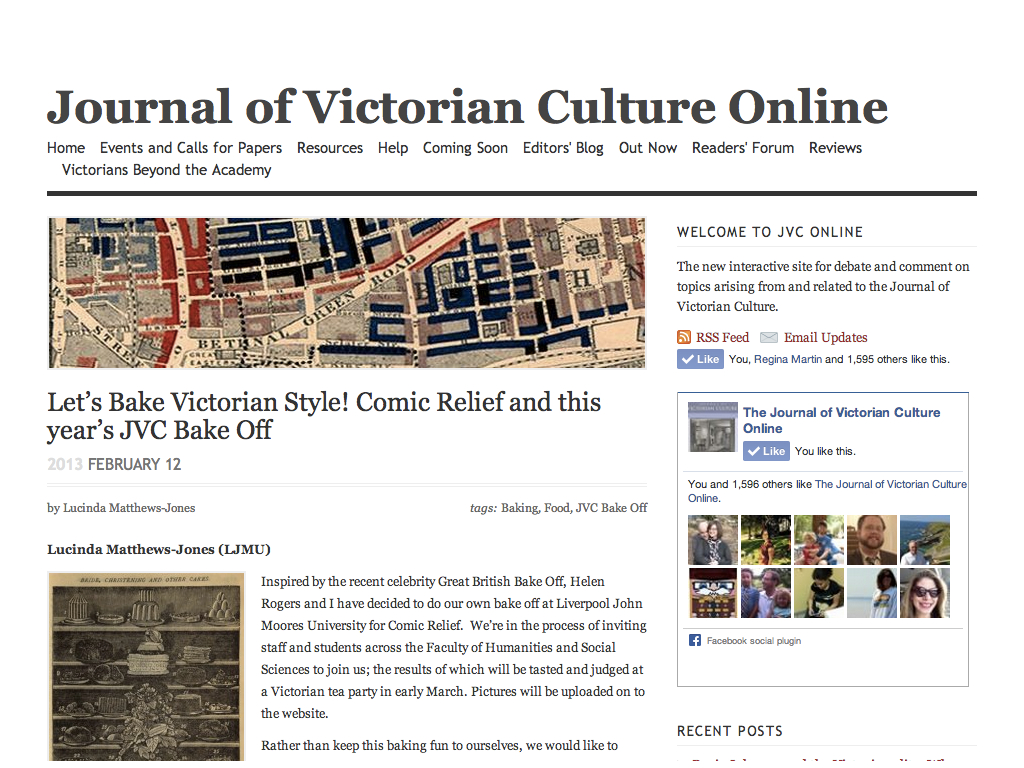
A more recent (and somewhat controversial) steampunk materialist intervention involves the baking and altering of recipes from the Victorian period. This is a contest from The Journal of Victorian Culture, that advertises a bake off. Among scholars, this kind of practice is largely seen as a fun addition to the more traditional forms of textual scholarship. Still, there are several chefs within the steampunk fan community who see their work as analogous to the object-work of their fellow fans. Of course, this practice is enabled with the digitization of many Victorian cookbooks like Nelson Home Comforts (1892) and The Lady’s Own Cookery Book and New Dinner-Table Directory (1844). As Tim Morton suggests, “ideology is externalized in food,” and I would add, that the act of baking in steampunk reveals the practice as a critical intervention into culture (11).
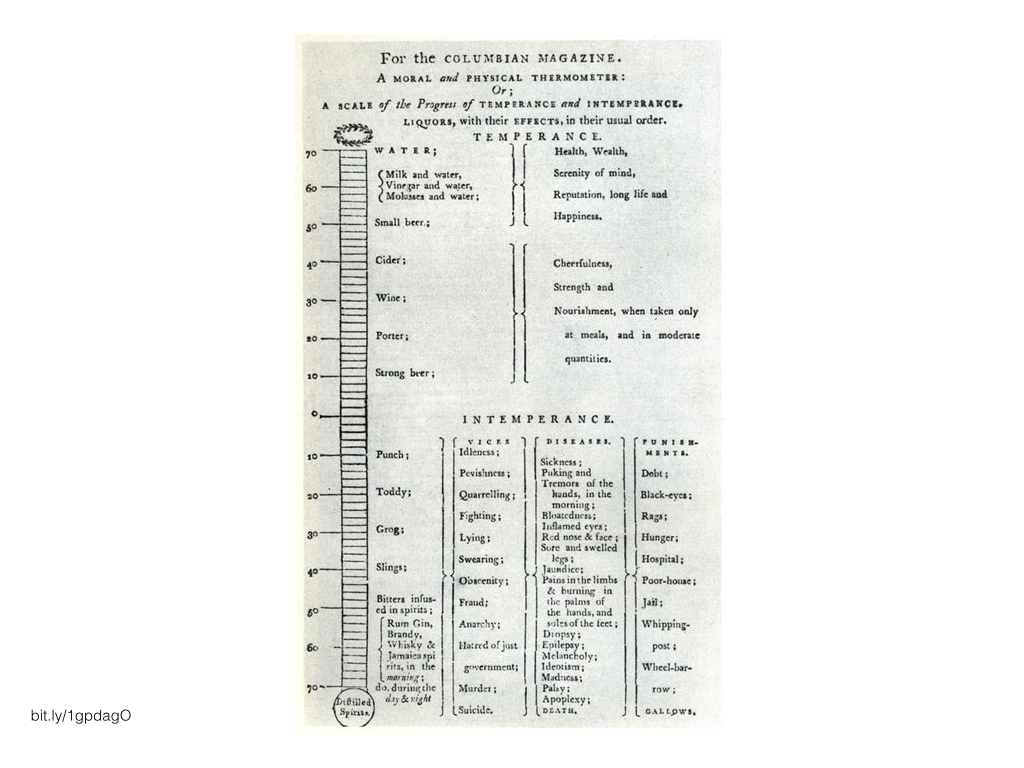 The anachronistic practice of steampunk baking is often felt on a physical level, as contemporary stomachs confront the diets of centuries-past. Sarah Lohmann’s “Drink Like a Colonial American Day” post from 2012 is a good example, as it creates a humorous effect to underscore historical difference in the form of alcoholic tolerance. Lohmann began her day sipping bitters, then had 11 oz of hard cider for breakfast, 2 oz of brandy during mid-morning, and another 12 oz of cider with lunch. She quit after the lunch cider, and without consuming the additional brandy on a mid-afternoon break, another cider for supper, or a final drink of ‘spirits’ meant to finish the day. On the following day, Lohmann expresses her appreciation for the late nineteenth-century temperance movement. “I feel like the temperance movement has always gotten a bad rap,” Lohmann observes, “particularly recently with the boom in books and documentaries about prohibition. But considering in 1830 we were drinking five gallons of distilled spirits per person per year, and a decade later that number was down to two-that’s pretty incredible.”
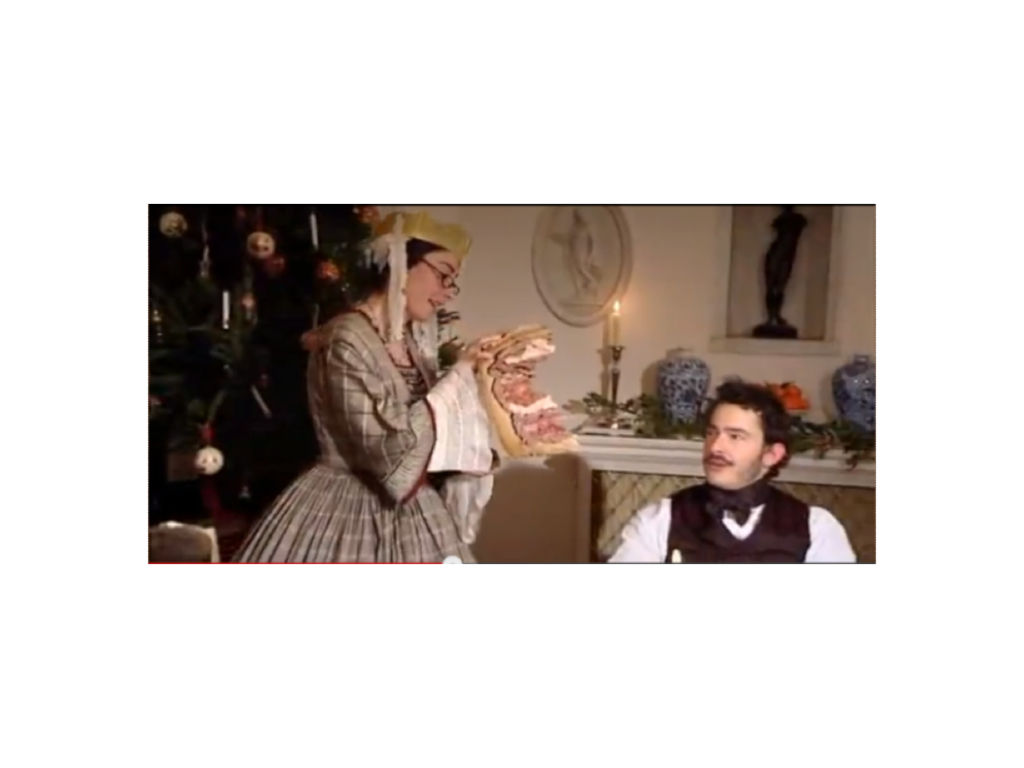
Baking experiments are “steampunk” as a materialist/historical practice designed to produce an effect through the humor of anachronism. Giles Coran and Sue Perkins, for instance, experiment with late Victorian cuisine on the show The Supersizers Go… The show takes inspiration from Morgan Spurlock’s Supersize Me, where he attempted to eat McDonald’s cuisine exclusively for a month. Coran and Perkins translate this into eating specific diets from different historical periods. In the episode dealing with the Victorian period, the shows stars had to eat dishes like Cold Game Pie (a huge pie pictured here) that is filled with “8 types of game bird, ham, chicken, bacon and tongue.” They were also asked to eat Boiled Calf’s Head, in which the brains were scooped out and cooked with a butter and herb sauce and the ears fried and served with tomatoes. The analysis at the end of the show underlines the difficulty of maintaining a Victorian diet. The narrator reports that “[i]n the last week Sue’s had 20,000 calories, she’s downed 14 liters of booze, and eaten countless animal heads.” The clinic doctor Perkins visits reports that she’s gained nearly an inch on her waist and 7 lbs in weight. The conclusions here highlight the interplay between ideology and appetite, but they also suggest how ideology is experienced in a physical and material way.
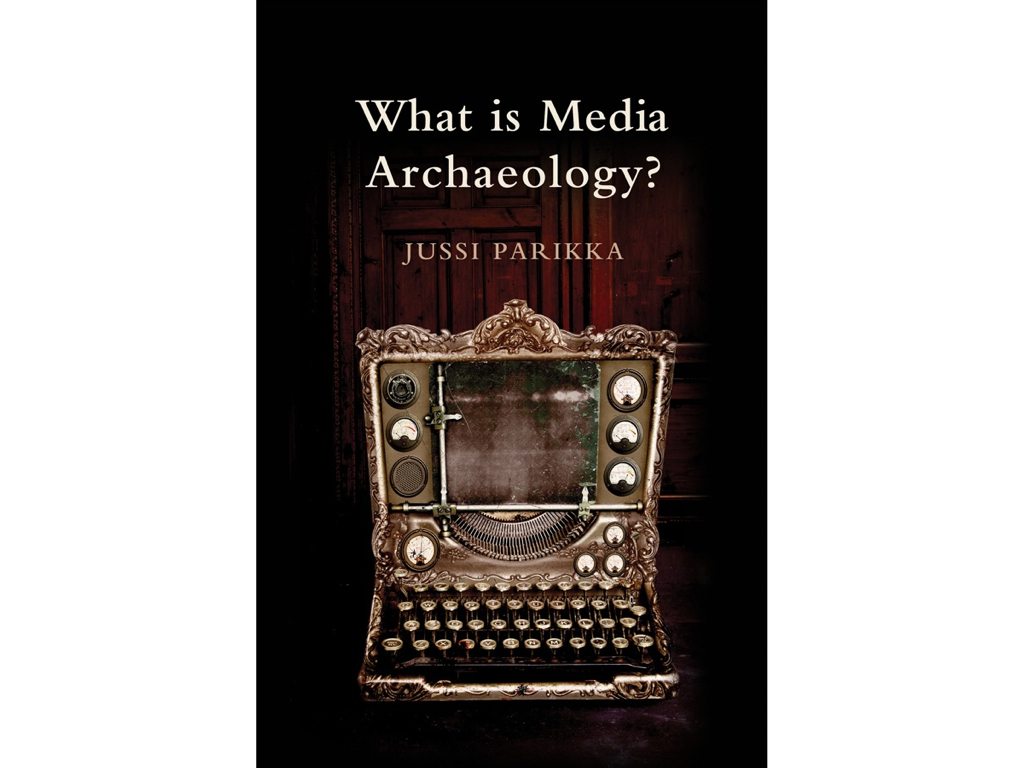
I’d like to end here by referencing some of the observations of media archaeologist and critical maker Jussi Parikka. In the introduction Parikka critiques the “linear progress myths” in many histories of technology and celebrates the quirky temporalities of steampunk enthusiasts who experiment “with alternatives.” Steampunk shows that there is more potential to the past than is usually shown by humanists interested in archiving and stabilizing the past. Critical making is, therefore, not simply a way of understanding history, but is also an investigation of what could have been, what Trevor Owens calls alternative historicism. For Owens, alternative-historicism shows how “strange and contingent the past is,” and that it is “only inevitable in hindsight.” The making and rewiring of past technologies provides us with an opportunity to see how, for example, colonialism might have played out differently with a different set of economic, sociological, or technological circumstances. In contrast to Latour’s definition of critique of “a privileged access to the world of reality beyond the veils of appearances,” critical making sees critique as a tactile methodology involved in investigating about, speculating upon and experimenting with the material of ideology. Thank you!